

Chinese Investment in Uzbekistan Tops $8 Billion: How the Balance of Power in Central Asia Is Changing – Alona Lebedieva
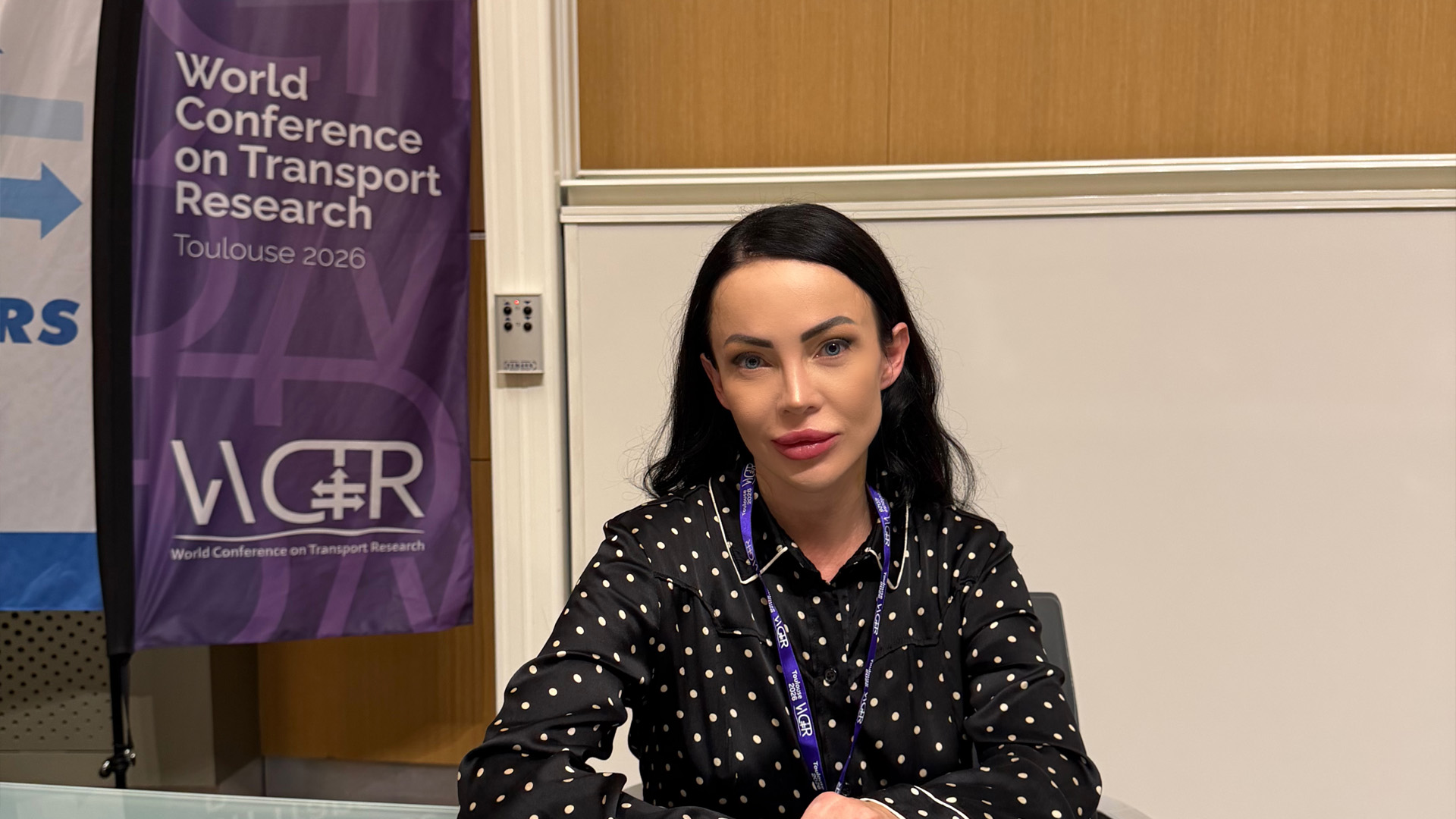
Alona Lebedieva
As Alona Lebedieva, owner of the Ukrainian industrial and investment group Aurum Group, notes, an important change lies not only in the growing volume of Chinese capital but also in the gradual evolution of the cooperation model itself. Uzbekistan seeks to attract investment not merely in infrastructure construction or resource extraction, but in the creation of higher value-added production, technological development, and industrial modernization. This approach is consistent with the country’s broader economic strategy, which envisages economic diversification, the development of technology-driven sectors, and deeper integration into global value chains.
The scale of China’s presence is particularly noteworthy against the backdrop of Central Asia simultaneously becoming one of the priority areas of the foreign economic policy of the European Union and the United States. The EU is developing transport connectivity with the region through the Global Gateway initiative and the Trans-Caspian Transport Corridor, while seeking new partners in critical raw materials and digital infrastructure. In April 2025, the EU and the Central Asian countries upgraded their relations to a strategic partnership, and the European Union announced a €12 billion Global Gateway investment package. The United States is also seeking to deepen cooperation with Central Asian countries, particularly in the field of critical minerals. Against this backdrop, China already has a significantly deeper economic presence, shaped not only by major state-backed projects but also by thousands of enterprises involving Chinese capital.
The transport factor is also gaining particular importance. Uzbekistan is simultaneously interested in the development of the China–Kyrgyzstan–Uzbekistan railway and in expanding routes towards Europe through the South Caucasus. In July 2026, President Shavkat Mirziyoyev proposed considering the possibility of integrating the China–Kyrgyzstan–Uzbekistan railway with the Baku–Tbilisi–Kars route. Potentially, this could strengthen the country’s role as one of the key transit hubs between China, Central Asia, and European markets. For Tashkent, this is a particularly advantageous configuration: in such a case, Chinese and European transport initiatives do not necessarily compete with one another but can instead complement each other.
At the same time, the American track is also becoming noticeably more active. In February 2026, the Uzbek and American sides reported the implementation of a three-year economic cooperation programme worth $35 billion, covering energy, critical minerals, transport, agriculture, and IT. In June, negotiations with American companies continued around specific projects in the extraction and processing of critical minerals, energy, metallurgy, artificial intelligence, and digital technologies. This demonstrates that competition for Central Asia is increasingly shifting from political declarations to concrete investment and technology projects.
For Uzbekistan itself, this creates both new opportunities and strategic questions. The country, with a population of more than 38 million, is carrying out large-scale economic reforms, seeking to complete its accession to the WTO, attracting foreign capital, and positioning itself as one of the emerging centres of economic growth in Central Asia. Chinese investment can accelerate the modernization of infrastructure and industry, but at the same time, Tashkent is interested in diversifying its partnerships and attracting capital from Europe, the United States, the Gulf states, and other Asian economies. As of July 2026, Uzbekistan’s WTO accession process is still ongoing, while the country has stated its intention to complete it during 2026.
This is why the issue can be viewed not only through the traditional narrative of the “growing influence of China.” A far more interesting question is whether Uzbekistan can use competition among global centres of power as an instrument for its own economic modernization. If China, the EU, the United States, and the Gulf states are simultaneously interested in access to Central Asia’s markets, resources, and transport potential, Tashkent gains the opportunity to demand from its partners not merely financing, but also the localization of production, technology transfer, job creation, and the development of its own capabilities. In this case, growing competition among external partners may strengthen Uzbekistan’s own negotiating position.
In this context, according to Alona Lebedieva, Uzbekistan could become a telling example of Central Asia’s new economic multi-vector approach. The main question is no longer who — China, the EU, or the United States — will “win” the competition for the region, but how effectively the countries of Central Asia themselves will be able to use this competition for their own development. For Uzbekistan, with its large domestic market, young population, and high rates of economic growth, this opportunity could become one of the key drivers of development over the next decade.
Alona Lebedieva
Aurum Group
email us here
Legal Disclaimer:
EIN Presswire provides this news content "as is" without warranty of any kind. We do not accept any responsibility or liability for the accuracy, content, images, videos, licenses, completeness, legality, or reliability of the information contained in this article. If you have any complaints or copyright issues related to this article, kindly contact the author above.
